
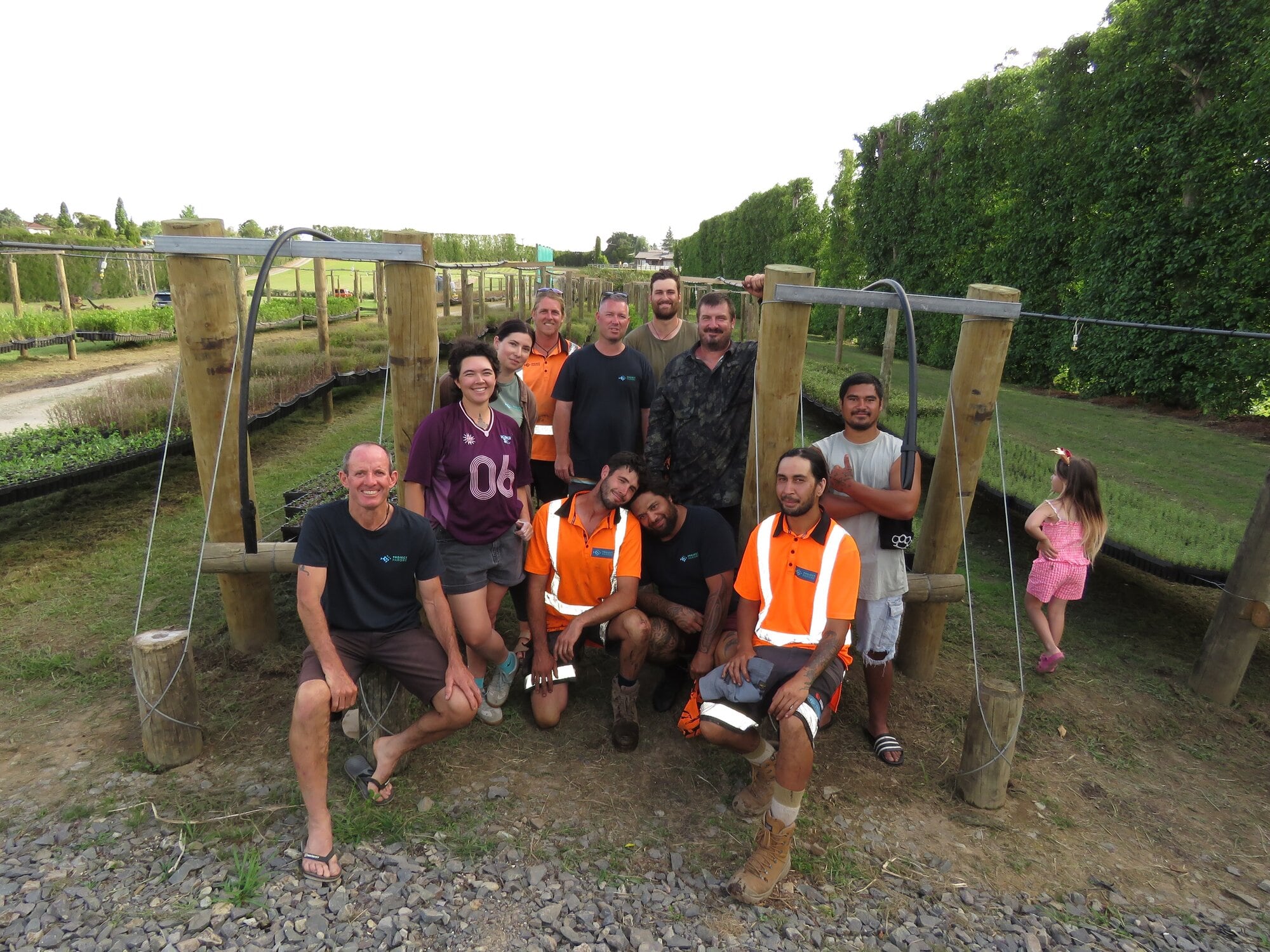
Environmental group Project Parore has moved to a new base at 48 Church St as it plans for the future beyond its five-year Jobs for Nature funding, which ends in June 2026.
“We’d outgrown our 0.2ha space at Mulgan St,” said Project Parore general manager Brodie Davis. “We were there for over three years with Kate Pfennig as our landlord, which was great, but with the plants, vehicles, and equipment, things were becoming inefficient.”
The new 1-hectare site, officially opened on November 26, gives the group more space for its nursery, office, and equipment. More than 200,000 plants are on-site at various growth stages, with more than 100,000 planted annually across the northern Tauranga Harbour, Davis said.
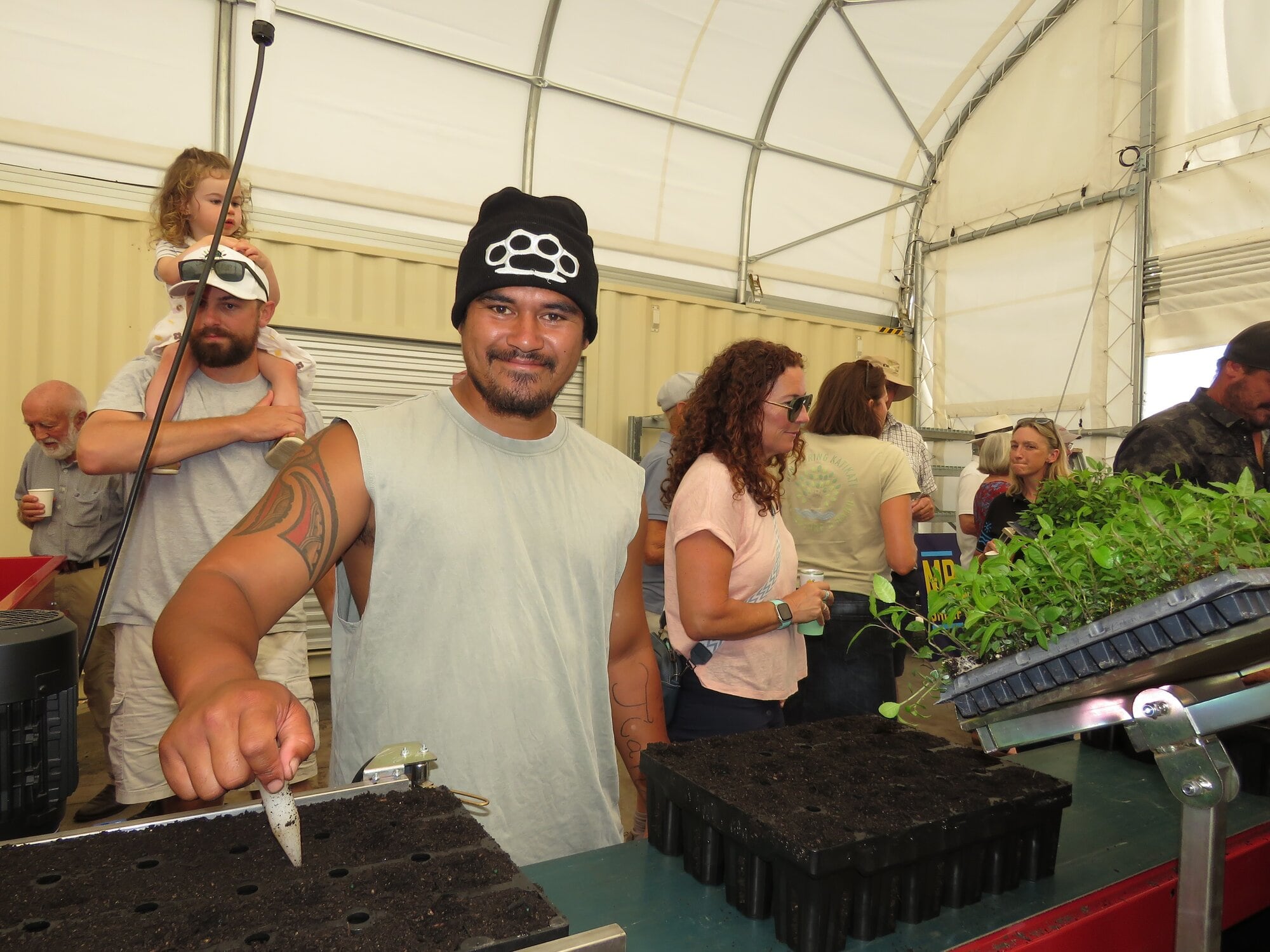
REP Crew Team Leader TeJay Samuels with the new tray filling machine. Photo / Merle Cave
Project Parore works with farmers, orchardists, councils, hapū and volunteers on fencing, native planting, wetland restoration, pest control, and fish passage projects, all aimed at improving biodiversity, freshwater health and the harbour ecosystem.
New machine
Since receiving Jobs for Nature funding in 2021, Project Parore’s operations team has grown from three staff to nine full-time staff and six seasonal workers. Project Parore is governed by a board elected on behalf of an incorporated society, which is a registered charity.
Davis said the new base is already boosting efficiency.
“A key part of our efficiency boost has been the new tray-filling machine, a recent investment for Project Parore,” said Davis.
“It can fill trays of different sizes, up to 10-cell 1-litre trays, allowing us to repot species like pūriri and tōtara from smaller trays into 1-litre trays.
“Using two 10-cell trays at a time is far more efficient than handling individual 1-litre pots. The trays are reusable and allow air pruning, which helps plants grow healthier.
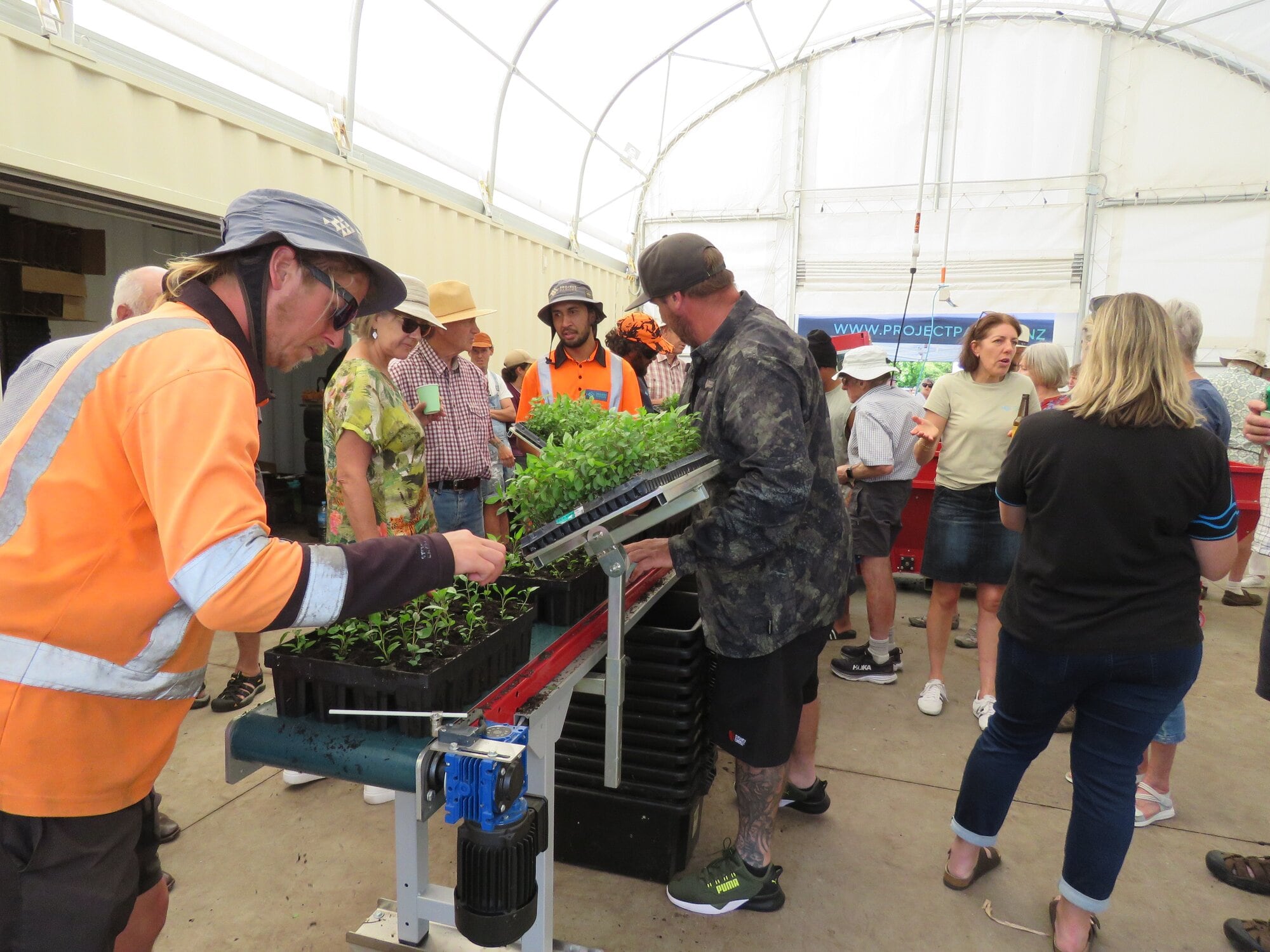
Logan Brewer helps his crew show guests at Project Parore’s base launch how the new tray filling machine works. Photo / Merle Cave
“With this new machine, our crew potted almost 60,000 plants in just two-and-a-half days, showing how much more efficiently we can operate.”
Davis said the Renaturing Katikati volunteer crew was showing interest in making use of the machine too, “which is brilliant, as it is nice and user-friendly under guidance from staff. It’s also a very social activity”.
Post-and-wire system
Other new features of the new base included a newly-built post-and-wire system, which raises the new trays off the ground and allows airflow beneath them.
“This, combined with the new machine, is helping to improve our efficiency,” Davis said.
He said the Project Parore operations team began in 2021 with a general manager and three staff.
One of those roles was the Katikati Environment Activator (KEA) position, driven by Sharon Strong, who works with the Renaturing Katikati volunteers in the urban spaces.
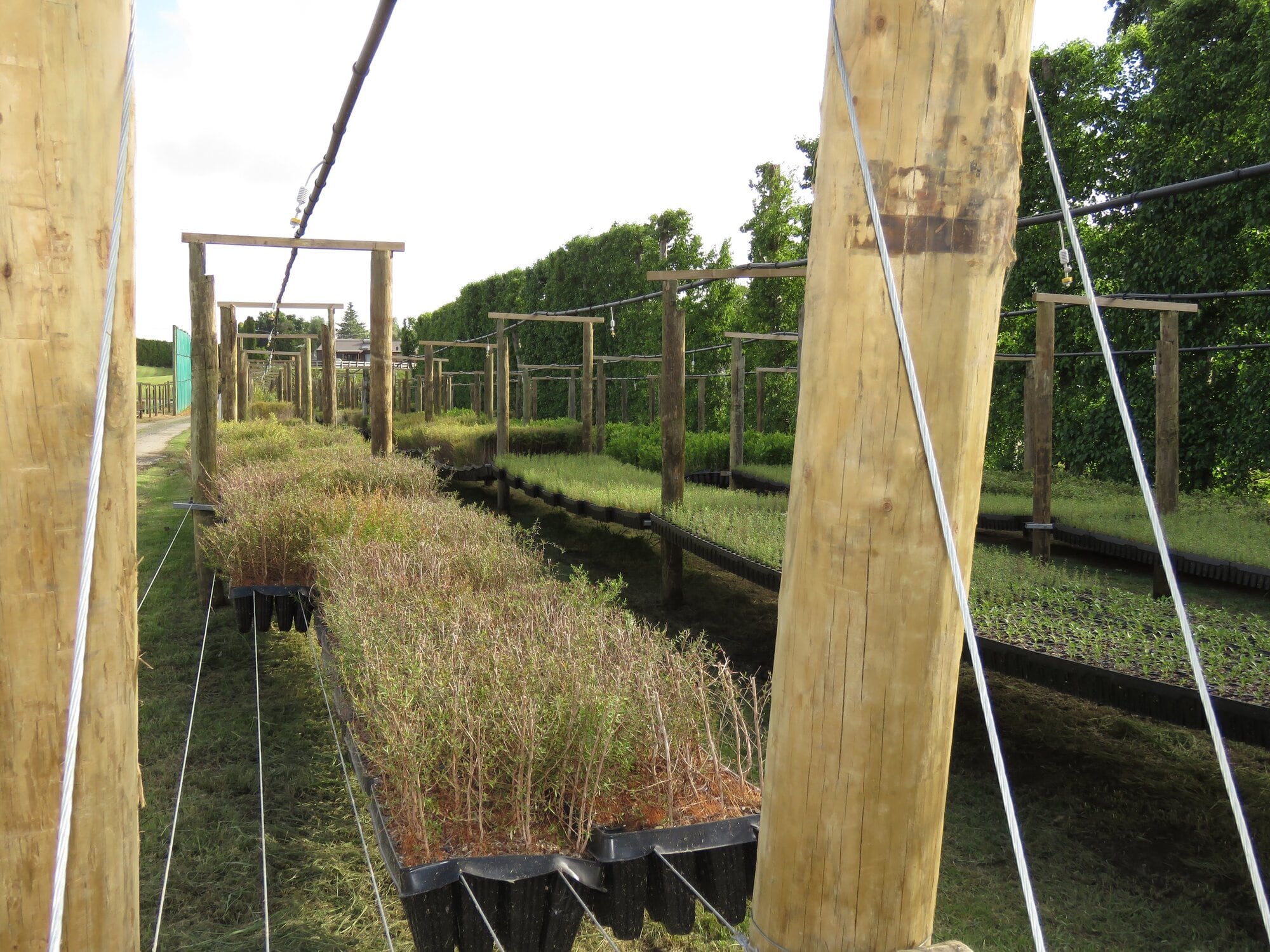
The new post and wire system, which is low-cost and raises plants raised off the ground. Photo / Merle Cave
“It’s all about retaining a locally-developed environmental restoration team to continue getting the mahi [work] done,” said Davis.
Te Mata wetland
Project Parore was also recently successful in securing a commercial contract via a tender process at Te Mata wetland in Waihī Beach.
“To sustain the crew, we’re going to need more of those contracts moving forward. It was a great community project to be involved with,” Davis said.
“The move to the new base is all about progressing the operations team beyond the five-year Jobs for Nature funding, so we can continue working with the community as we strive for long-term, ongoing improvements to the environment.”
Much of Project Parore’s restoration work is delivered through landowners signing up to five-year Environmental Plans (EPs) via the regional council.
Next season’s planting
Davis said future core work would increasingly involve maintaining what had already been planted.
“Most EPs are five-year plans, including prep work such as pest-plant control, native planting, and then years of follow-up maintenance within specific budgets. We partner with the regional council, and landowners to help co-fund and complete the work on the ground.
“We are thankful for our funding partners and projects we are currently involved with, and if anyone is thinking about planting native trees or retiring marginal land, now is a good time to get in touch with us as we are booking in new jobs for next season’s planting.”
For more information, visit: www.projectparore.nz