
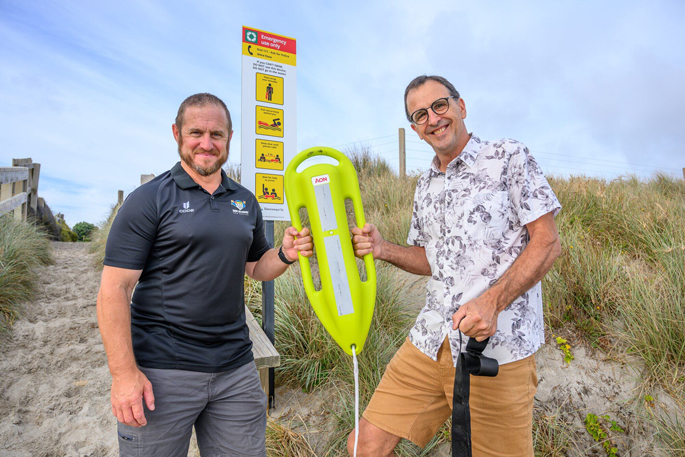
Tauranga City Council says it can’t afford to install public water rescue equipment along the entire Tauranga coastline despite a Surf Life Saving New Zealand recommendation.
The equipment includes flotation devices such as rescue buoys and life rings that could be used by bystanders attempting a rescue before emergency services arrive.
These devices are commonly installed at coastlines, lakes and harbours to improve water safety.
Eastern region lifesaving manager Chaz Gibbons-Campbell said Surf Life Saving New Zealand (SLSNZ) had requested public rescue equipment be installed at 51 beach access points across Tauranga – three at Pilot Bay, three at Mauao and 45 at ocean beaches.
The recommendation followed a 2024 council-commissioned review of coastal hazards, beach use and rescue data, and a coroner’s finding that Bay of Plenty father Reon Wikeepa, who drowned at Moturiki in 2023, would have had a greater chance of survival if those attempting to rescue him had ready access to a flotation device.
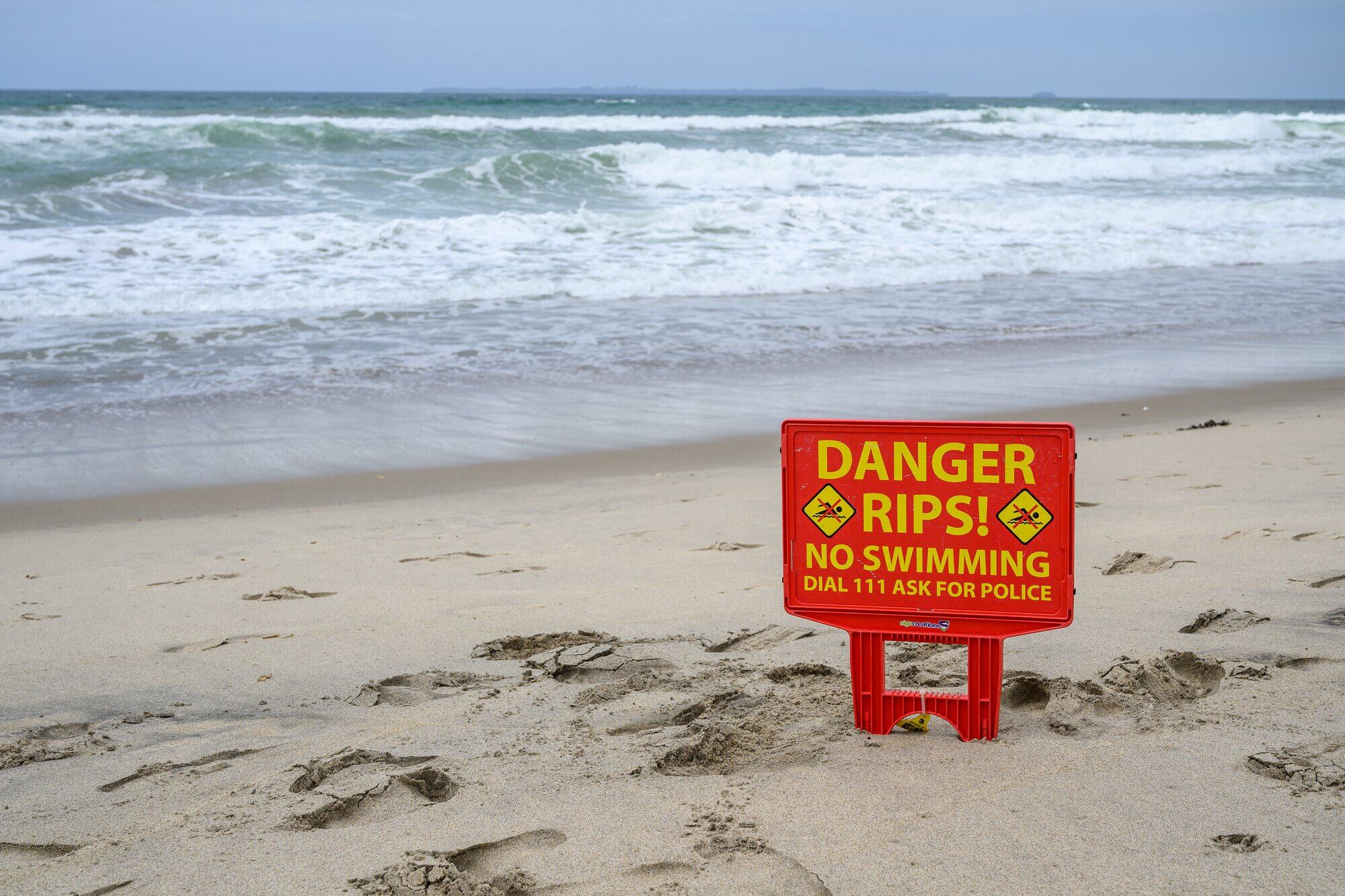
The rip near the Otira Close beach access in Pāpāmoa has been the site of surf rescues in late 2025. Photo / David Hall
The council said it had opted for a more “targeted approach” to rolling out the rescue equipment.
“Maintaining signage and rescue equipment across dozens of sites would require significant upfront investment as well as ongoing operational funding, with current resources not permitting the entire project to be completed at once,” the council said in a statement to The Weekend Sun.
Instead, the council said it was prioritising locations where safety measures would have the greatest impact while remaining practical and sustainable.
Public rescue equipment and water safety signage had been installed at Mount Maunganui, Ōmanu and Pāpāmoa surf clubs, as well as the Moturiki track entrance.
Installations at surf clubs were funded through ACC as part of a nationwide programme delivered by SLSNZ in partnership with councils.
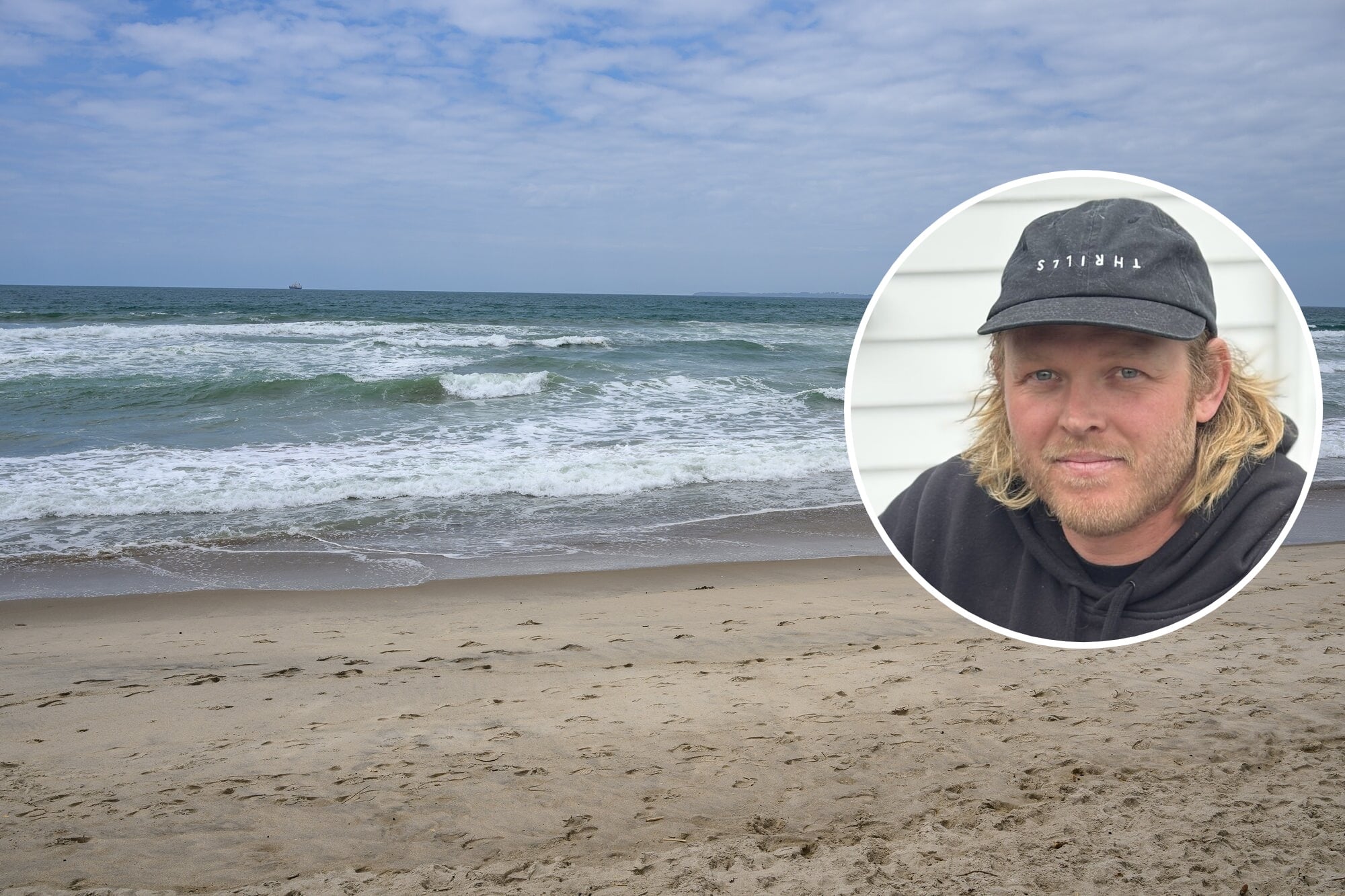
Dan Holland was hailed for his quick thinking and bravery after paddling into a dangerous rip at Otira Close beach access in November 2025 to rescue a woman who was swept hundreds of metres offshore. Main photo / David Hall
Equipment was installed at two additional sites – Arataki Beach and the Otira Close beach access – in December and this would be monitored over summer. The council said further locations may be considered in 2026.
Gibbons-Campbell welcomed the council’s new installations, describing both Arataki and Otira Close as high-risk areas.
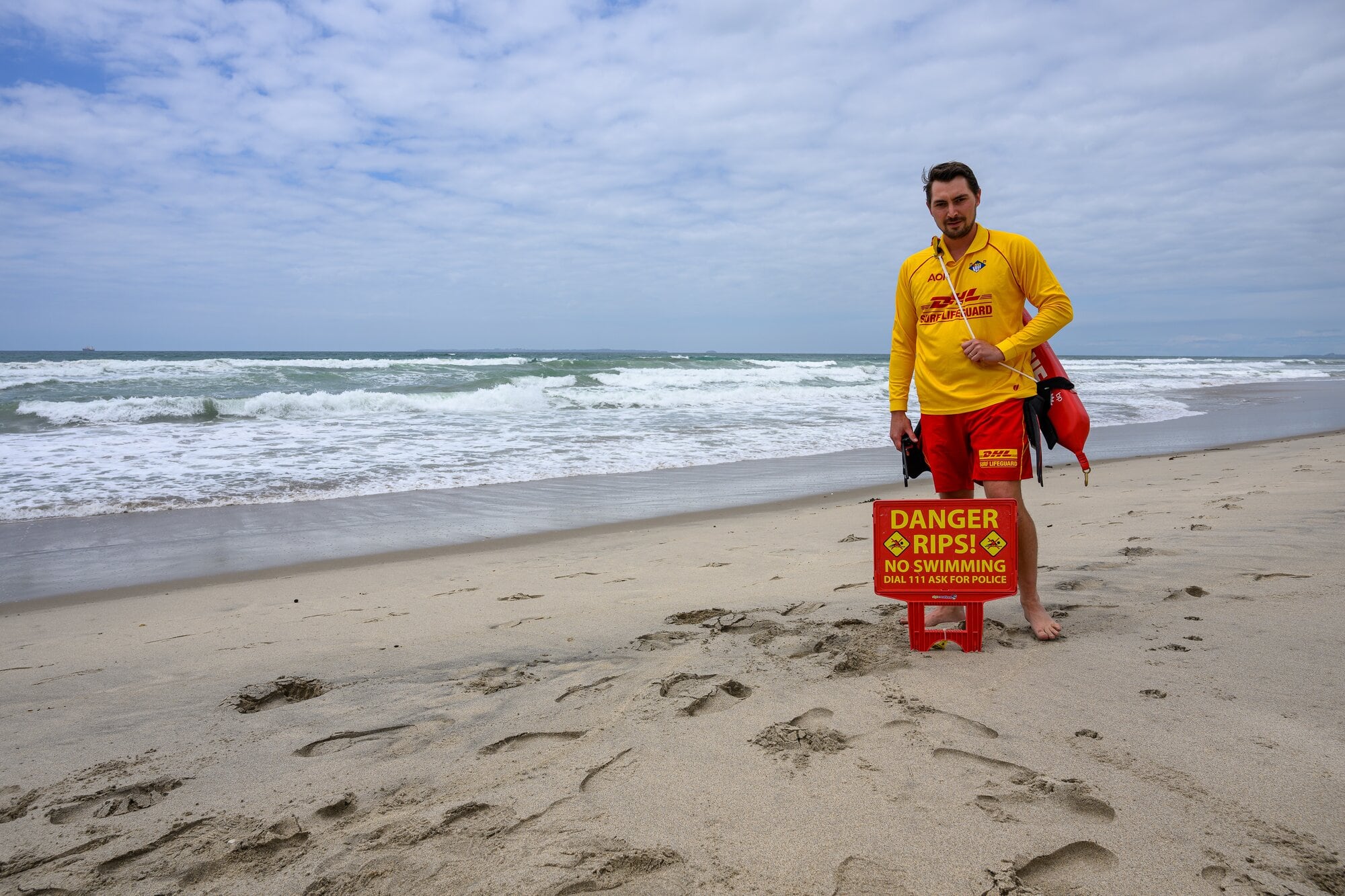
In November 2025, Eastern region lifesaving manager Chaz Gibbons-Campbell highlighted the dangerous rip near the Otira Close beach access. Photo / David Hall
“Those were the two spots where we were having all those rescues and bystander rescues in November, so that’s awesome,” he said.
While the SLSNZ report recommended rescue equipment at every beach accessway, Gibbons-Campbell acknowledged that full coverage was not always feasible.
“The report we provided was pretty comprehensive. It basically said you need something at every access way,” he said.
“I can understand that it’s not always feasible, but highlighting key spots is also really good.”
He also noted the council had not borne the cost of public rescue equipment units installed at surf clubs, as those were funded by ACC.
He suggested community funding could help expand the rollout if council budgets were a limiting factor.
“There are other council areas where local community groups have funded the public rescue equipment and worked with council to get it installed,” he said.
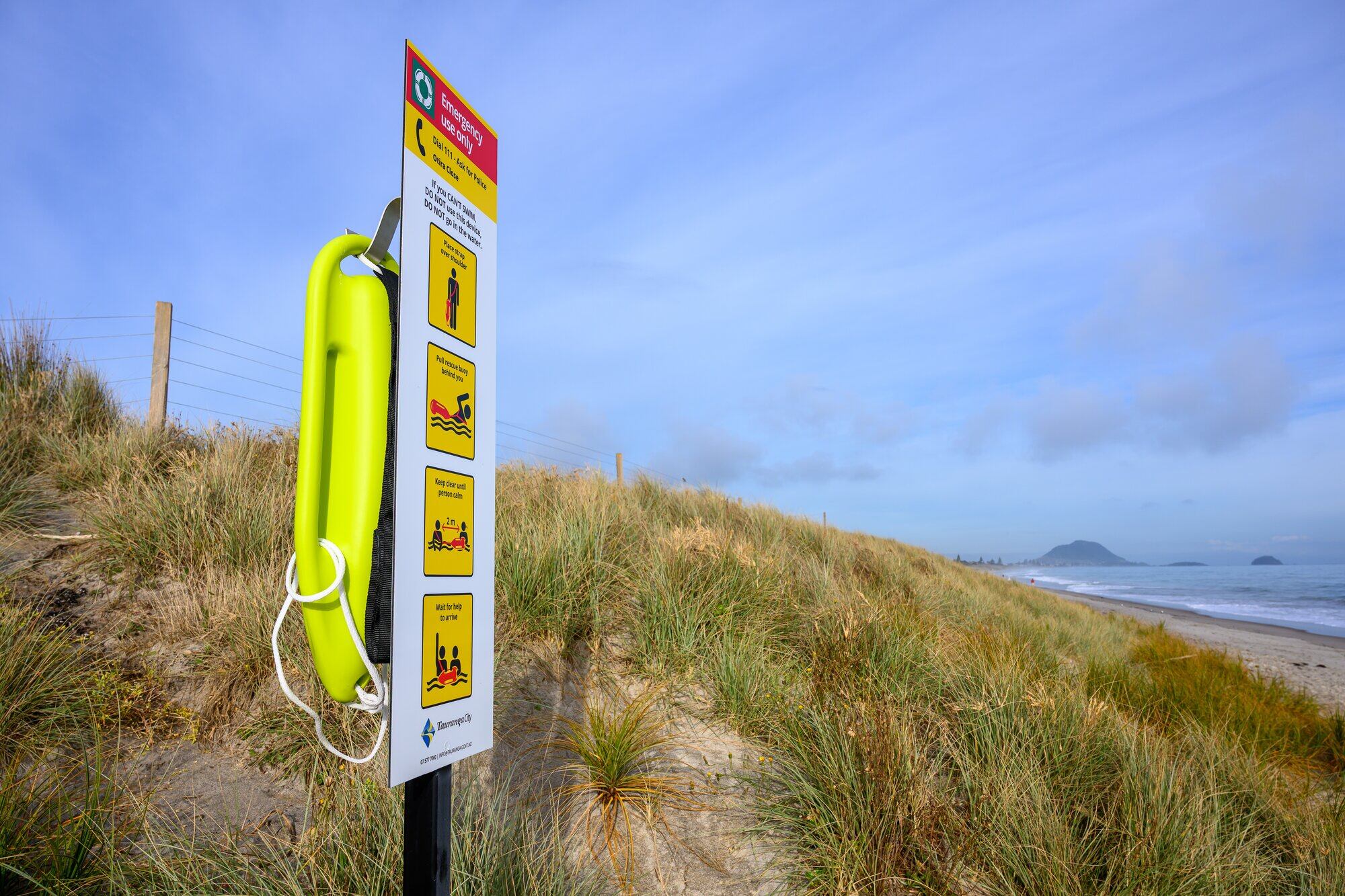
The public rescue equipment installed at the Otira Close beach access. Photo / David Hall
The council said the rescue equipment rollout sits alongside a broader water safety programme being developed with Drowning Prevention New Zealand, including a Tauranga-specific strategic water safety framework, hazard assessments, community engagement and skill development around inland and ocean water safety, and nationally aligned safety messaging.
Gibbons-Campbell said collaboration was positive and hoped progress would continue.
“They’ve obviously listened and actioned these two sites,” he said.
“Anything that gets rescue equipment where people need it is a good step.”