
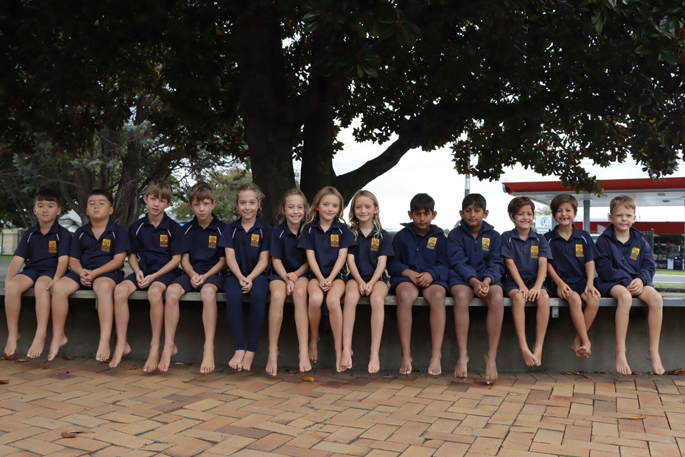
If you think you’re seeing double at Otūmoetai Primary School, you’re probably right.
The Tauranga school has 13 sets of twins on the roll and a 14th pair starting next term.
Principal Zara McIndoe said she started counting when a teacher realised she had three sets of identical twins in one classroom.
“I found out we had 13 sets of twins and then I realised that it was 5% of the roll.”
“I just noticed it, and I thought, … oh my gosh, we do have a lot, this is quite special.”
In Year 4 alone, there are seven sets of twins among the about 100 students.
With fewer than 550 Year 0-6 students in 23 classrooms, the school’s proportion of twins is well above the global average.
McIndoe said she was not sure why her school had so many twins, but it could reflect a wider trend towards multiples becoming more common.
A 2021 Oxford University study found the rate of twins increased by a third over 40 years, with about 2.4% of babies born worldwide now being twins.
This was put down to a rise in fertility treatments and households delaying having children.
Health New Zealand says about 1000 New Zealand whānau a year experience a multiple pregnancy.
McIndoe said the school’s small size made it easy for twins to be recognised as individuals rather than getting lost in a crowd.
Still, the sheer number of lookalikes could lead to the occasional mix‑up.
“One teacher told a boy, ‘Don’t forget swimming after lunch’, and he said, ‘I’m not Logan’. She didn’t realise he had a twin.”
Staff quickly learned to recognise each twin as an individual, with their distinct personalities making it easy to tell them apart.
She said the recent spotlight on twins had even changed a few minds.
“Some of the boys weren’t that keen on being twins, but now that it’s been brought to their attention, they quite like it.”
For the twins themselves, having a built‑in buddy brings plenty of fun.
Carter Beer, whose twin is Logan, said they enjoyed confusing teachers.
“Sometimes me and my brother trick our teachers at our old school by wearing the same clothes.”
For twins Paige and Sophia Rudnicki, the best part has always been having someone to play with.
The students are quick to point out the little things that set them apart from their siblings.
Some mentioned distinctions such as being the taller, older or faster twin, while others noted small physical features, such as a spot on the nose.
For Beau and Jonty, being twins meant always having an opponent ready for football battles.
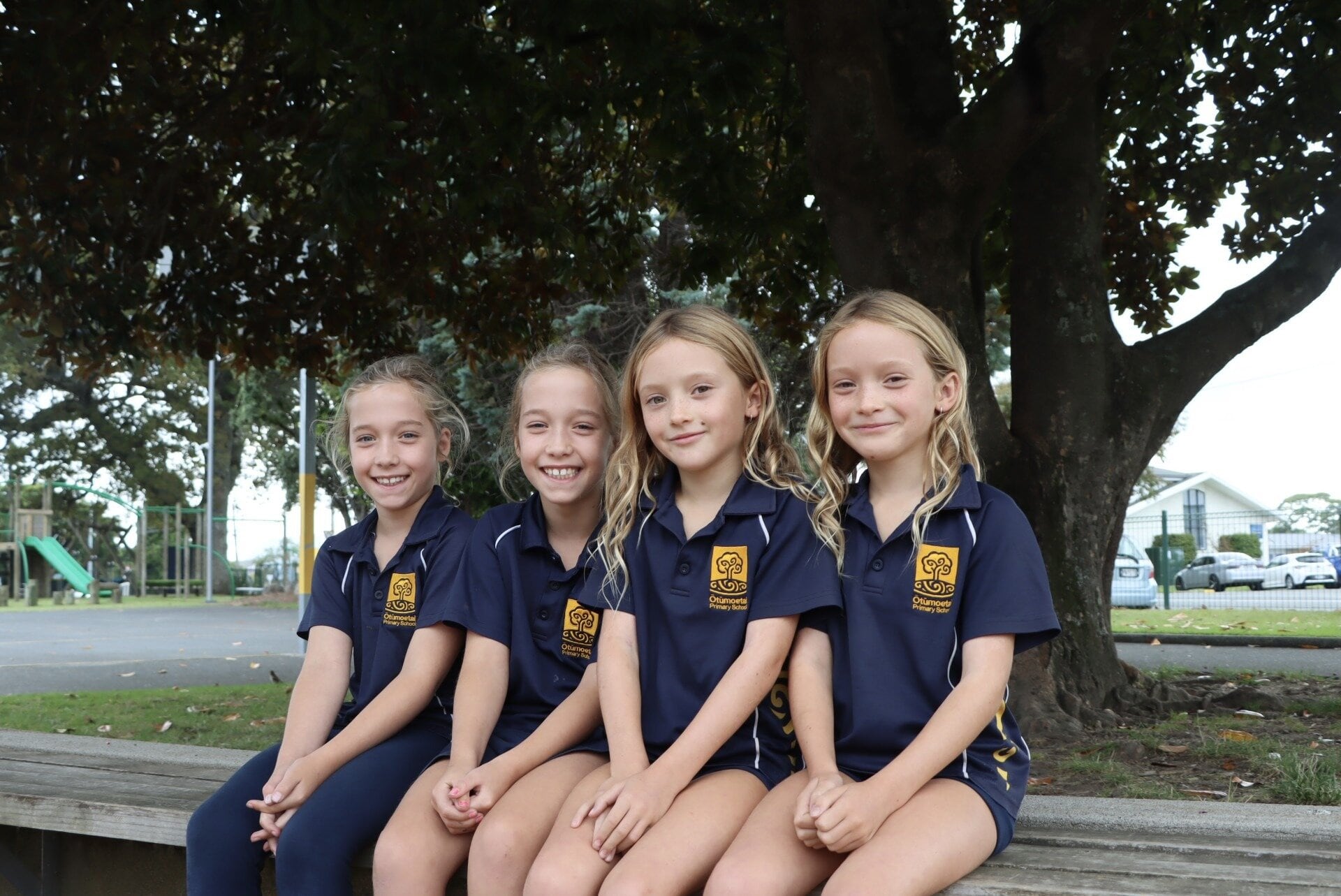
From left: Otūmoetai Primary School twins Havana and Stella Rasmussen, and Paige and Sophia Rudnicki. Photo / Zoe Blake
The school’s twin tally will soon grow again, with Chris and Hayley Bath’s sons starting next term.
The Hits Days with Hayley radio host Hayley Bath said she was surprised to learn her boys would be the 14th set of twins on the roll.
Just turning 5 last week, the fraternal twins shared many similarities, but their personalities were far from identical.
Bath said one was noticeably more outgoing and energetic, while the other was quieter and more laid‑back, yet often the more quietly confident.
She said the balance between them worked well.
Even though her boys are fraternal, they still experienced the classic twin mix‑ups.
“We’ve had their professional daycare photos come back with the same twin photographed under different names.”
Bath said life with twins brought a special kind of energy to a home.
“Twins instantly create this energy of fullness and family in a household.
“It’s all go, all the time, but the feeling of love and togetherness is amazing. There’s just more of everything in the best way.”
Who is more likely to have a multiple pregnancy
Things that could result in a multiple pregnancy include if you:
Zoe Blake is a journalist at the Bay of Plenty Times and Rotorua Daily Post.