
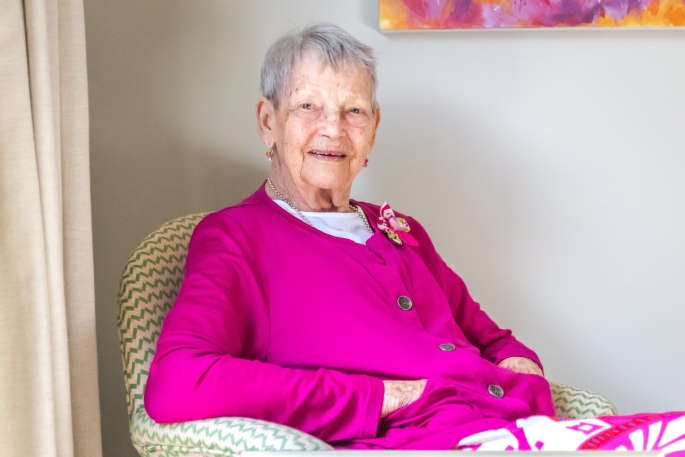
“I was too busy staying alive to die!” But three of Winifred McGregor’s schoolmates did die that day – at a gnarly, untamed and isolated Allans Beach, 25km out of Dunedin on the Otago Peninsula. It was a Saturday afternoon – February 21, 1949, to be exact.
That day, 16-year-olds Wynsome Taylor and Heather Copland, and 14-year-old Robin Ramsay, drowned on a school outing at a beach notorious for high-energy breaks, strong southerly swells and hazardous rips.
The beach is known as dangerous but dramatic – there’s more wildlife than human traffic on the sand. Think sealions and penguins.
Local wisdom nowadays would probably suggest a safer, patrolled beach in Dunedin if unsure in the surf. But that wisdom might not have been readily available in 1949 when a bus of 71 school boarders and five staff set out on a sunny afternoon for a beach picnic and swim. “[My] Second week at boarding school,” remembers Winifred or Win, Winnie or Freddy, depending on who you talk to. “We were pretty excited.”
But high excitement turned to tragedy – only 68 pupils climbed back on the bus home that afternoon.
‘Deadly’ or ‘disastrous’
Now, 77 years after that black Saturday, Win, a resident at Arvida’s Bethlehem Views Rest Home on Cambridge Rd, has committed her “very vivid” memories of the tragedy to paper.
“A Boarding School Experience”, it’s headed. If she’d woven the word “deadly” or “disastrous” into that banner, it would not have been sensationalising the memory. Then she agreed to share it with The Weekend Sun.
“It’s family history – something I can never forget. So, it’s important when I depart, the kids know a little bit more about me.”
The schoolgirls scrambled into their togs among the sand dune tussock grass and sprinted down the beach into a calm sea with gently breaking waves.
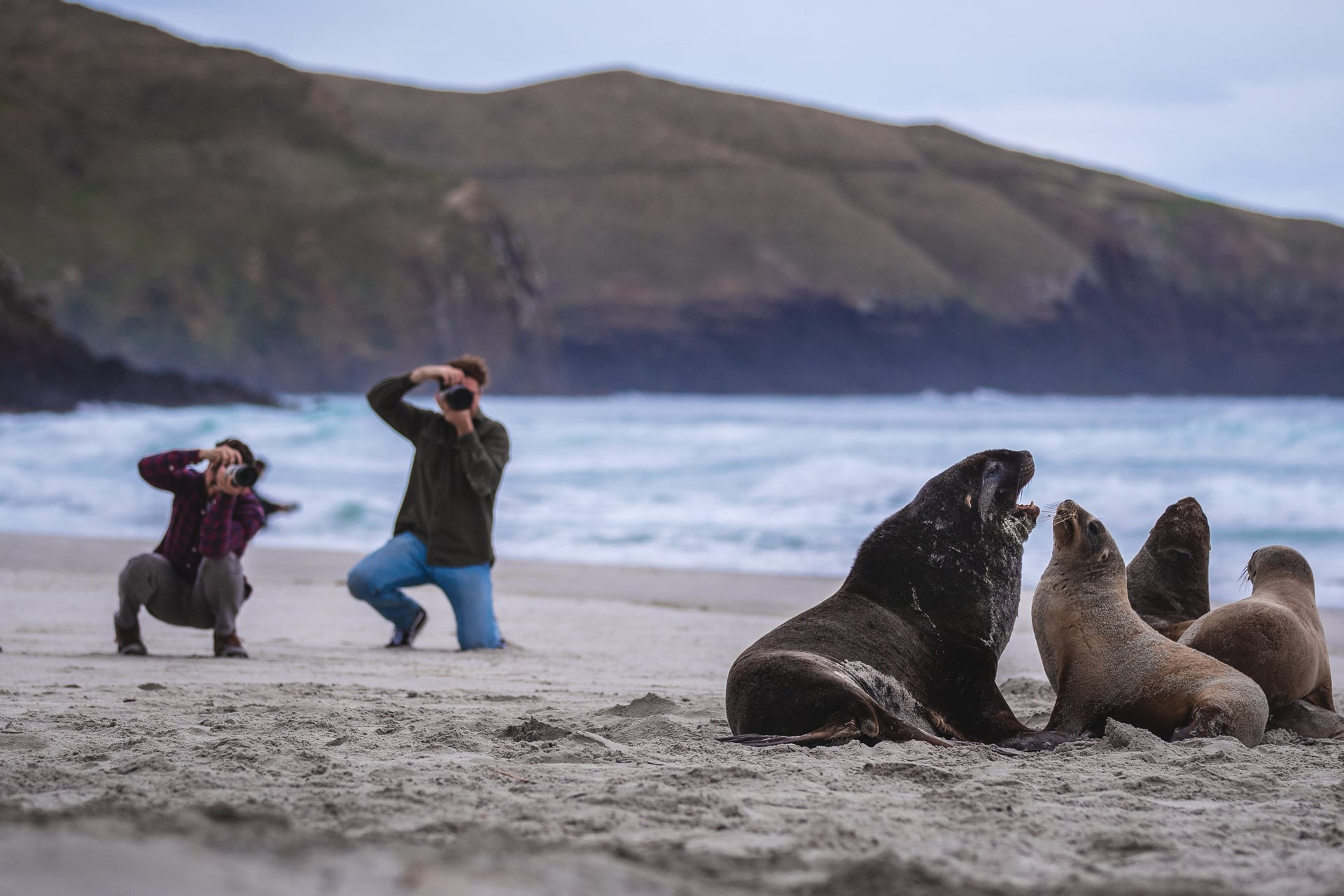
There’s more wildlife than people traffic on Dunedin’s notorious Allans Beach. Photo / Dunedin NZ
But Allans Beach is as treacherous as it is inviting. It’s moody, and can turn on you. And it did. One of the trademark swells swept along the beach. “I had my back to it – I didn’t see it coming,” Win said. “One minute calm, next a huge rogue wave and undertow.” Suddenly Win and 12 of her colleagues were floundering out of their depth, in a panic, in a wild surf.
‘Shoved my bum’
“The breakers kept coming – they’d pick me up, roll me in a ball and dump me. I’d come up in a trough.” One huge wave just gone, another one coming. “I could only see walls of water, spume, the sky. Couldn’t see land. I didn’t know where I was,” Win said.
She was well served by her upbringing. The strong swimmer knew breakers and could body surf from her family’s daytrips to Raglan from their farm at Knewstead near Hamiton. She was equipped to survive.
“I didn’t have time to be afraid, or think of dying. I was too busy,” Win said. “But these Dunedin monsters…I had never experienced anything like that before.”
She had a drill, a procedure to cope in such a crisis. Mouth closed, head down, arms outstretched trying to surf away from the rolling demons. Because they were after her. “I tumbled every which way. Then miraculously I’d pop to the surface in time to take a breath before another wave smashed on top of me.”
Then the heroine, sports mistress Miss Bembridge emerged from the churning surf. “She gave me a big shove on my bum, towards shore I presumed. And yelled at me to ‘keep going, keep going’. She was so encouraging.” Then Miss Bainbridge was gone. She had other lives to save.
Win’s most enduring memory was time. “Was I in the surf for five minutes or half an hour? I have no idea. It just seemed like a very long time”
Then a toe touched sand. “My God, what a relief! I had made it.”
Nearby was her friend Margeret – “floating on her back”. “She had a big nose and it looked like a shark’s fin.” Win can giggle about it now. “She didn’t realise she was in shallow water again.” She too had been saved.
Silent grief, suffering
On the beach stood another school mistress. “She looked terrible, hair wet and straggly, dress tucked in her bloomers. Absolutely distraught.” She, like Win and her friend, had no idea what was happening with the rest of the boarders out in the surf. “We were out, we were safe, and that was all we could worry about.”
The school mistress marshalled them to a nearby farmhouse where they were wrapped in blankets in front of an open fire. “We didn’t talk about what had happened. We didn’t discuss it.” Perhaps they were traumatised into silence? Three schoolmates dead. Silent grief, silent suffering.
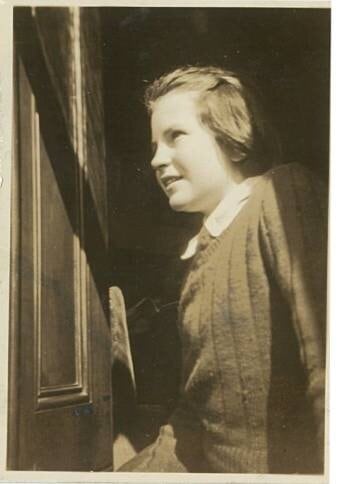
A 13-year-old Win McGregor came home in 1949, but three classmates didn’t. Photo / Supplied
“Then these haunting screams of anguish from down the hallway [of the farmhouse].” Somone confronted with the reality of events perhaps? Win shrugs – she can only imagine.
And a tiny distraction is introduced. A newborn baby. It belonged to the owners of the house and was passed lovingly between the girls. They giggle, the baby gurgles. They take some comfort.
“Even on the bus home that evening, we didn’t talk about what had happened.” Perhaps it just didn’t seem right. Nor, said Win, was it ever discussed, never broached. And there was no such thing as counselling or therapy. “We attended a memorial service at college and then just got on with life.” They quietly set three lives aside.
‘I was that baby’
Then, 63 years later, a strange coincidence. “A moment that makes you wonder about life,” Win said.
She and husband Mac were touring the South Island when she had an impulsive urge to revisit Allan’s Beach. While there, a man with three Border Collie dogs emerged from the farmhouse driveway.
“I explained to him I was one of the 13 girls swept away by the rip in ’49. And he said, ‘I was that baby that was passed around that day’. It was so lovely knowing that I had cuddled him at a time when I desperately needed someone, or something, to cuddle. And I could say ‘thank you’.”
Win supposed she was deeply affected by the drownings. “Because I’ve never stopped thinking about it. Talking about it. And I needed to write about.”
The 13-year-old “bit of a tomboy” had been sent to finishing school in Dunedin, to “become a lady”. And it just about did finish her. She stayed two years. And for whatever reason, she never returned.