
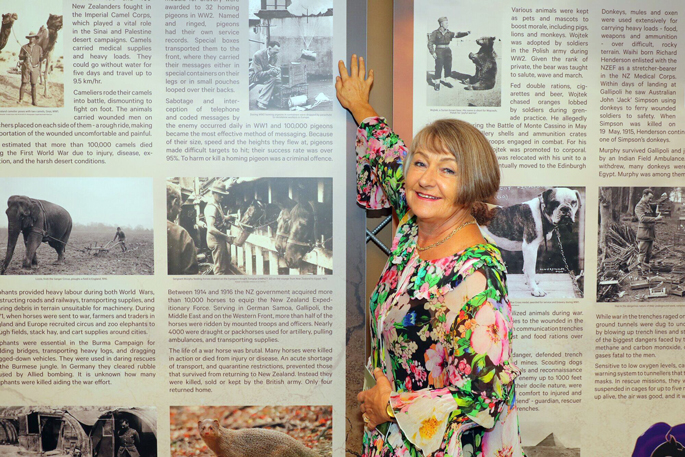
A new exhibition sharing the stories of five unexpected heroes and shining a light on the plight of animals in two world wars has opened in Katikati.
The exhibition – titled Unexpected Heroes – offers an interactive and immersive experience to visitors, to vividly bring the stories to life.
Launched on March 28 and set to run for a few months at Western Bay Museum, Unexpected Heroes is designed to show the reality of war, manager Paula Gaelic says.
“The exhibition would be very heartfelt and sobering to many, while some would feel an overwhelming sense of sadness from the imagery,” Gaelic said.
Five ‘ghosts’
Visitors will find the stories of five unexpected heroes with strong connections to the Western Bay region inside a reconstructed trench.
“People will be able to see and hear the stories of these five heroes of the Western Bay via use of hologram illusion, a technique called Pepper’s Ghost.
“They appear as ghosts and tell their own stories,” said Gaelic.
Private Winiata Rewi Tapsell from Maketu volunteered for war at age 22 and became part of the first Māori contingent to sail to the Dardanelles Peninsula on the troop ship SS Warrimoo.
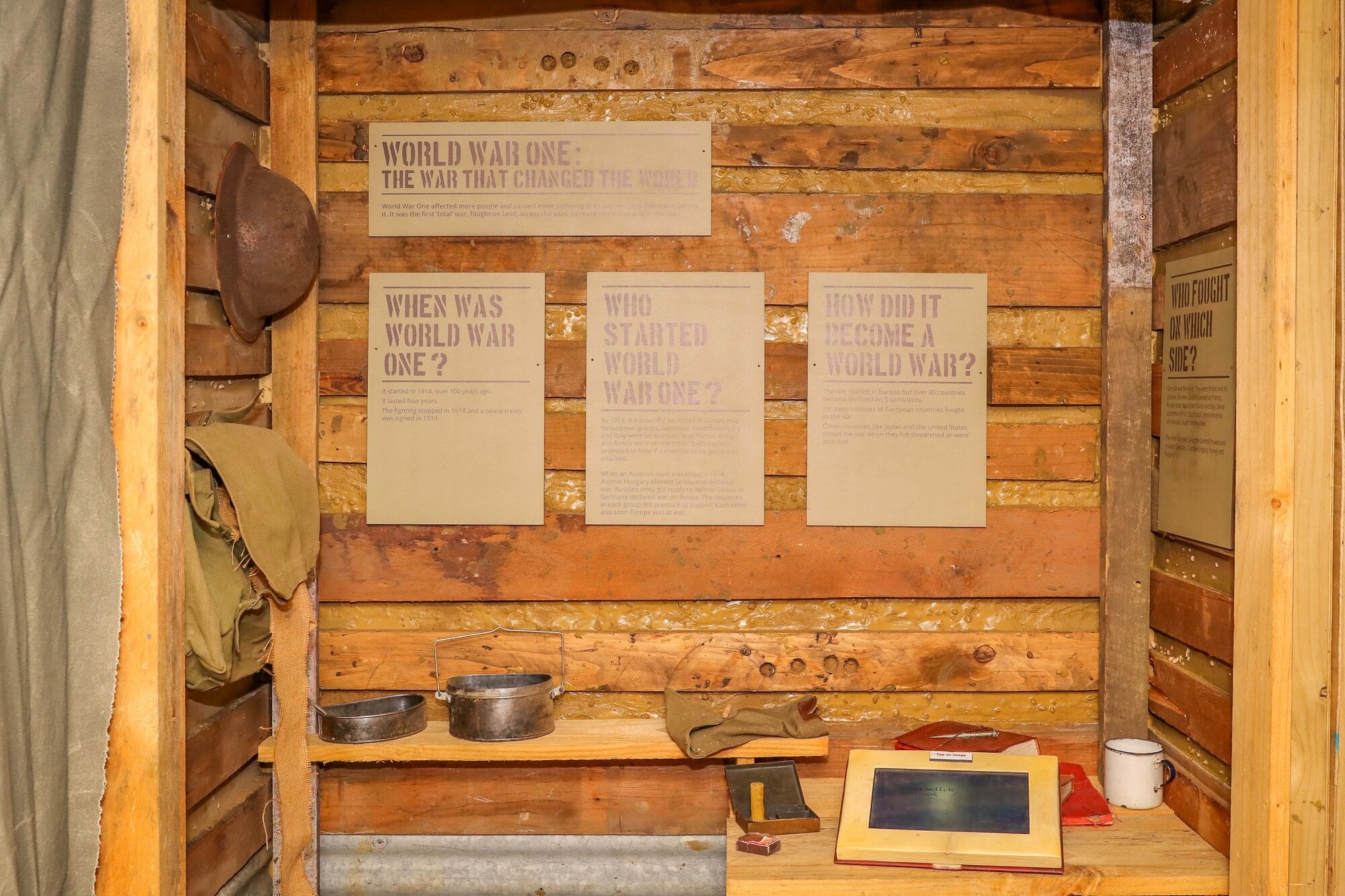
A reconstructed trench at the museum, displaying the stories of five unexpected war heroes via hologram illusion. Photo / Kelly O’Hara
Tapsell’s bravery and contributions during World War I had been recognised and honoured through various commemorations and exhibitions, Gaelic said.
“His story, particularly his role in the liberation of Le Quesnoy, is celebrated in the NZ Memorial Museum, in France and other historical sites.
“We must remember Māori service people were not acknowledged in any shape or form on their return and have only been recognised in recent years. It’s sad, but true,” Gaelic said.
Mary Dobbs of Te Puke features for her service aboard the hospital ship HMNZS Maheno, which arrived in Anzac Cove on August 25, 1915, to aid the wounded; and in the NZ Army Nursing Service. The daughter of a Bay of Plenty minister, she left for war on June 15, 1915.
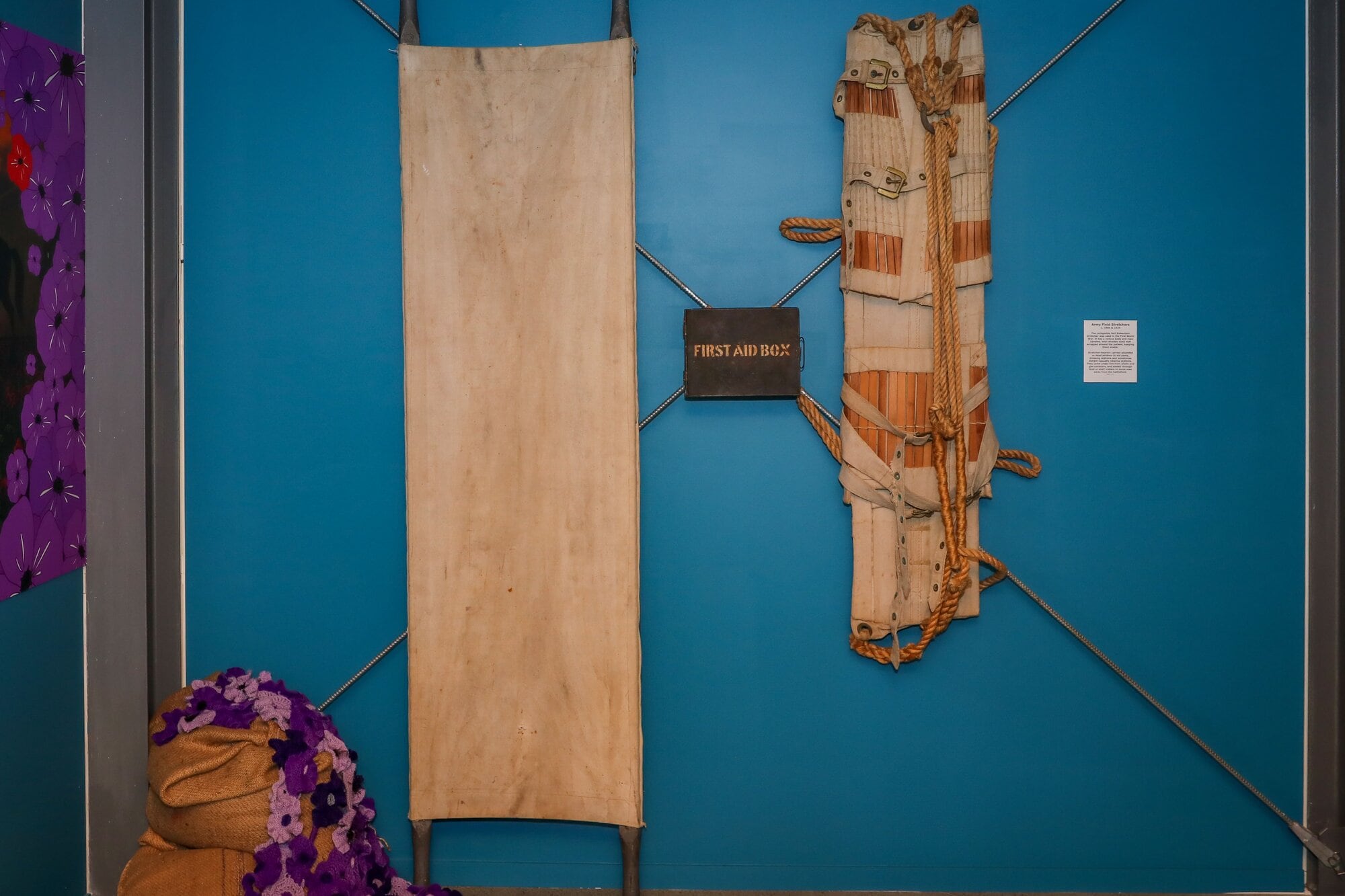
Army field stretchers and a first aid box from the world wars. Photo / Kelly O’Hara
Pongakawa farmer Arnold Watson signed up at the age of 34 with the 19th Mounted Reinforcements. He was drafted into the 15th NZ Company of the Imperial Camel Corps and was later co-opted as a semi-official war artist.
Katikati man George Henry volunteered as a rifleman and went to France, where he was wounded, evacuated and lost his lower leg to defeat life-threatening gangrene.
Back home, Te Puke’s No 1 Road School pupil Winifred Best was one of 175 students to give a concert at Alliance Hall to raise funds to send Christmas billies to the school’s ex-pupils serving in the war.
Unexpected Heroes was last shown publicly back in 2015, when the Western Bay Museum hosted the exhibition to commemorate the armistice signed between the Allies of WWI and Germany on November 11, 1918.
11 animals
To complement the history of these heroes, Gaelic said, the exhibition also told the stories of 11 animals that served in the world wars.
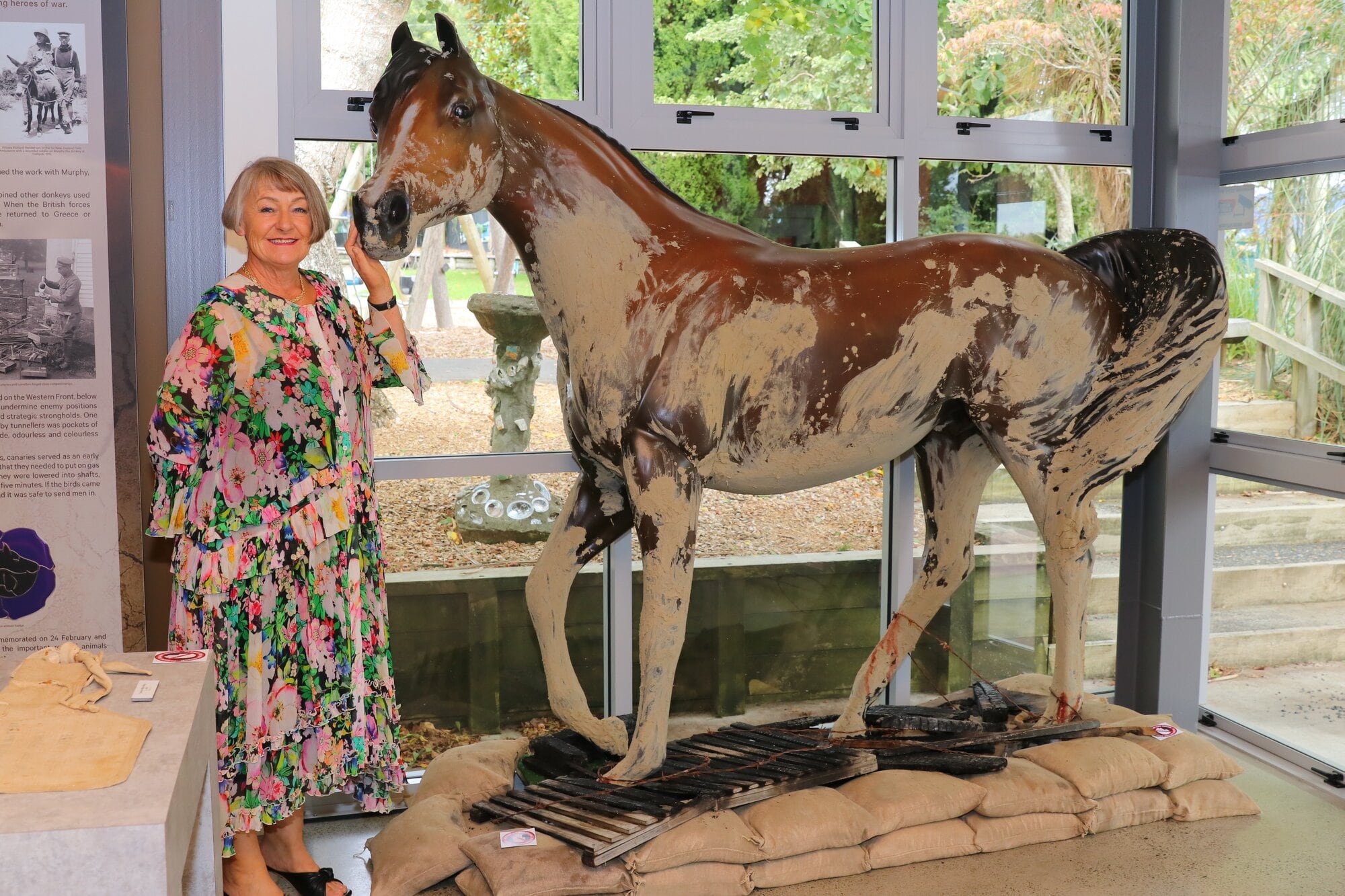
Manager Paula Gaelic with a horse sculpture, recognising how millions of animals served and died in the world wars – part of Unexpected Heroes on display at Western Bay Museum. Photo / Kelly O’Hara
“During the First and Second World War, animals were a crucial part of the war effort,” said an exhibition board.
“Not just companions, they were comrades who changed the course of history.”
It’s estimated that more than 16 million animals served in WWI. “An estimated eight million horses, donkeys and mules, one million dogs and many hundreds of smaller animals died alongside the men and women they served.”
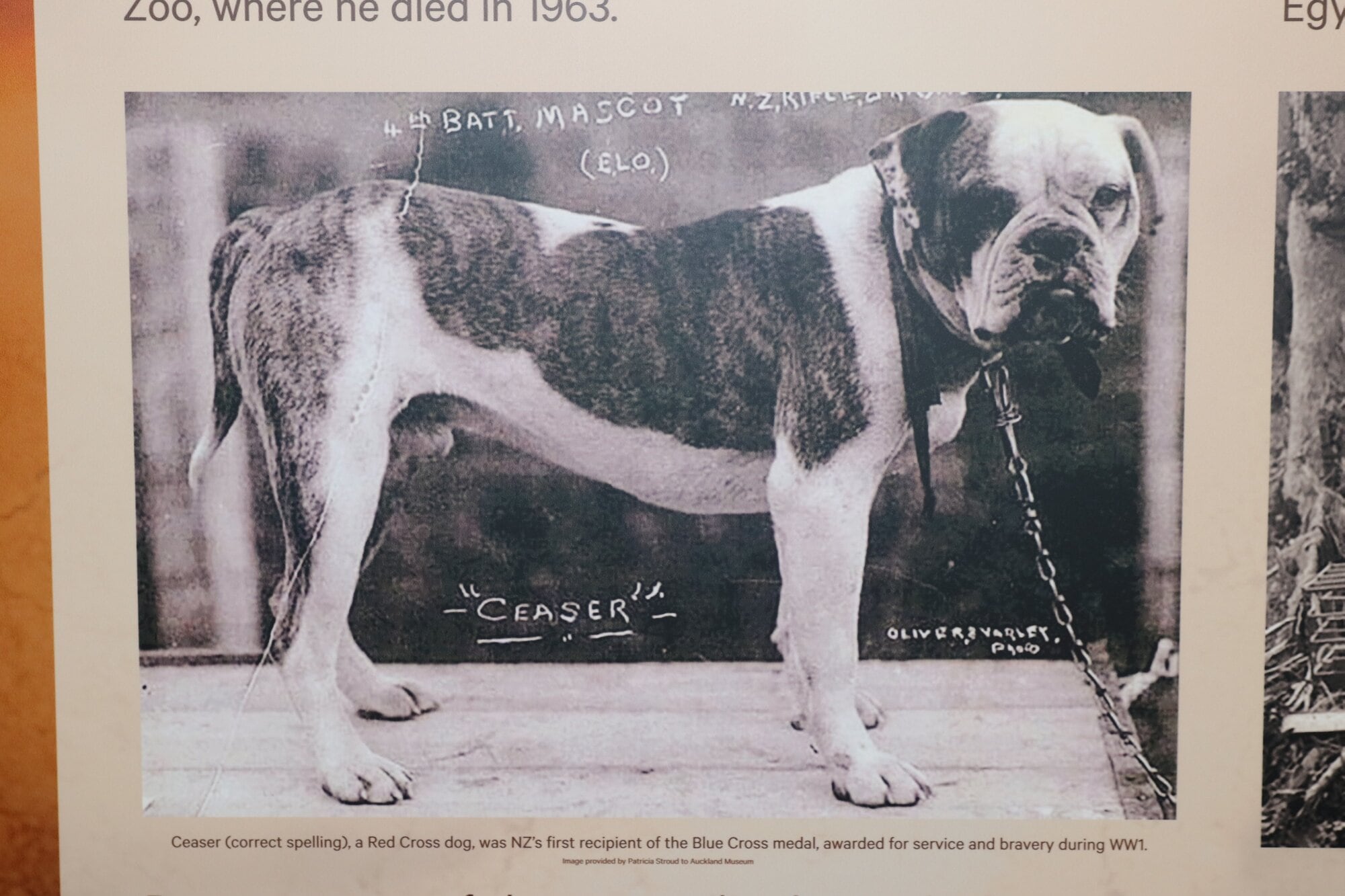
One million dogs and many hundreds of smaller animals died alongside the men and women they served in WWI. Photo / Kelly O’Hara
The exhibition board said it was impossible to know how many animals died in WWII, but the number was likely to be in the tens of millions, including pets, zoo animals, wildlife and livestock.
Ideal time
“Unfortunately, this is reality – and I believe WWI was known as ‘The Great War’ because it was meant to be the war that would stop all wars,” Gaelic said.
“How little we have learned, as here in 2026 we are still doing it!”
With Anzac Day approaching, Gaelic said it was an ideal time for Western Bay residents to visit the exhibition and learn more about the sacrifices of all in the two world wars.
“With Anzac Day approaching, I felt it was important to truly reflect, have we learned anything? I want our audiences to feel, see and read the reality!”
Unexpected Heroes will be on display at Western Bay Museum at 32 Main Rd, Katikati, for the next few months.
Western Bay Museum is open 10am-4pm Monday to Friday and 11am-3pm at weekends. On Anzac Day, April 25, the museum will open at 12 noon.