
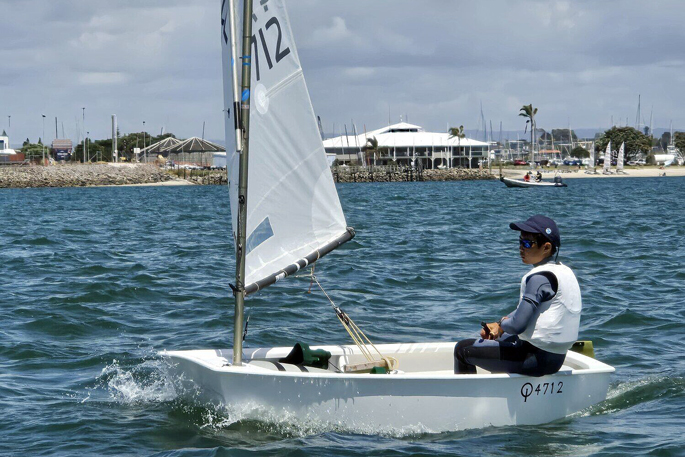
From near-empty boat ramps during Covid to becoming one of the country’s fastest-growing junior sailing hubs, Tauranga Yacht & Power Boat Club is enjoying one of the most encouraging periods in its history.
The club’s revival has been driven by a strong focus on youth sailing, family involvement and grassroots participation, with more than 800 school children experiencing sailing through the national RŪNĀ programme this season.
Centreboard chairperson Nik Burfoot said the transformation during the past four years had been remarkable.
“Post-Covid, the club almost died in terms of junior sailing,” Burfoot said. “We were down to just a handful of young sailors. Everyone’s worked incredibly hard since then, and now we’re seeing the results.”
RŪNĀ
A major part of that success had come through the Yachting New Zealand RŪNĀ programme, which introduces school-aged children to sailing, wind energy and the marine environment.
This season 824 children aged from eight to 13 came through the Tauranga club for a sailing experience – which was more than double the previous year’s numbers.
“We’re now one of the top clubs in the country for delivering RŪNĀ,” Burfoot said.

Young sailors in Optimist yachts on the Tauranga harbour.
The programme had become the foundation of a broader rebuilding effort, he said.
Children who enjoy the experience are encouraged into Learn to Sail courses before progressing into Green Fleet – the club’s introductory racing programme for young Optimist sailors.
The growth of the club’s Green Fleet had been rapid, Burfoot said.
At the end of last season, Tauranga had four sailors in Green Fleet. This season the club finished the season with 16 young sailors progressing through the programme – and many continuing to race through winter.
Girls
Even more encouraging for organisers was the number of girls becoming involved.
“The majority are girls,” Burfoot said. “We’ve got fantastic female participation coming through.”
Club manager Jo West said the atmosphere around the club had changed dramatically.
“There’s a real energy around the place now,” West said. “Families are engaged, kids are excited, and people can see the programme is working.”
The club’s success was already showing on the national stage, West said.
Tauranga sailors recently recorded some of its club’s strongest performances in years at the national Optimist championships, with sailors claiming top placings and age-group titles.
Burfoot said the strength of the junior fleet reminded many long-time members of the era when the club helped produce world-class sailors such as Peter Burling and Tom Saunders.

Peter Burling with a group of youth sailors at the Tauranga Yacht & Power Boat Club.
“We’re starting to get back to that level again,” he said. “When you’ve got a strong base coming through, success naturally follows.”
Building the base
Several Tauranga sailors are preparing to compete internationally, with youth sailors heading to world championship events in Europe later this year, including competitions in Denmark.
“Part of the club’s recent success has been driven by our coaches, Lorenzo from Argentina and Noah who has come up through our sailing programme,” Burfoot said.
“They’ve spent the past two years helping develop Tauranga’s youth programme. They’ve been a huge influence and really helped lift the whole programme.”
The club philosophy is not centred solely on elite performance. Instead, the focus has been on participation, accessibility, and creating a sustainable pathway for young sailors.
“If you focus only on your top sailors, eventually you run out of sailors,” Burfoot said. “We’ve focused on building the base first.”
That approach is attracting attention from other clubs around the country, including some of New Zealand’s traditionally dominant sailing clubs, Burfoot said.

Young sailors aboard the Stuart Pedersen, an RS Quest training yacht, in front of the Tauranga Yacht & Power Boat Club.
Removing barriers
He said the club is also working to remove barriers for families entering the sport.
One of the biggest challenges is the transition from Learn to Sail into racing, where families traditionally need to purchase boats and equipment.
To help, Tauranga Yacht Club had developed a growing fleet of rental Optimist boats, allowing children to continue sailing without the immediate financial pressure of buying their own boat.
“It can look complicated from the outside,” Burfoot said. “There’s a lot for parents to learn, and it can feel intimidating at first. We’re trying to make that journey easier.”
Club leaders said sailing was often misunderstood as an exclusive sport.
“People think yacht clubs are only for older people with expensive yachts,” Burfoot said. “But what we’re really about is kids learning skills, getting outdoors, building confidence and being part of a community.”
The club’s programmes now extended beyond junior racing, with women’s sailing initiatives, disability sailing groups, and active winter racing fleets all contributing to growing momentum.
Membership had climbed to about 500 people, while this winter’s racing numbers were stronger than the club had seen in years.
Life skills
For West, one of the most rewarding aspects of the club’s growth had been watching young sailors develop confidence both on and off the water.
“These kids are outside in all conditions, learning resilience, teamwork, independence and problem-solving,” she said. “Those are life skills.”
With another intake of RŪNĀ students expected later this year and a growing waiting list for programmes, the club believes this is only just beginning.
“We’d love to see even more families discover sailing,” Burfoot said. “The future looks incredibly bright for the club.”
“We’ve got this amazing wave of young sailors coming through now. It feels like we’re only just getting started.”