
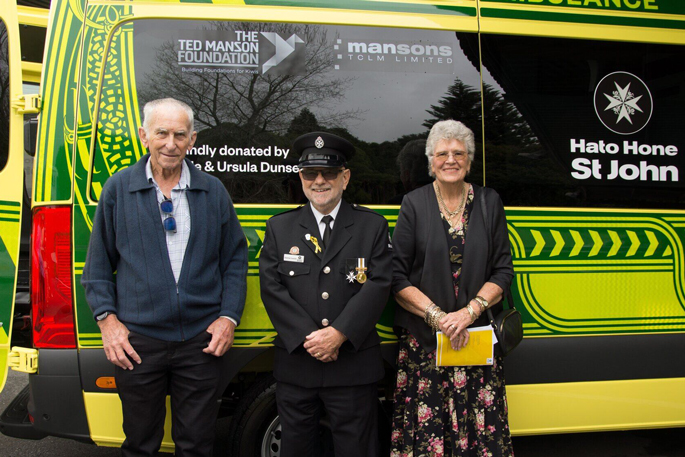
A new emergency ambulance is serving the Bay of Plenty thanks to the generosity of Tauranga couple Erle and Ursula Dunseath.
The new Generation 4 ambulance was blessed during a special ceremony at the Tauranga ambulance station on August 29, attended by the Dunseath family, Hato Hone St John ambulance staff and fundraising team members.
The vehicle is fitted with modern equipment, including a power-load electric stretcher and stair carry chair, which will make it easier and safer to move patients in and out of the ambulance.
The Dunseaths said they planned to leave a gift for an ambulance in their wills, but after discussing it with their lawyer realised by making the donation now they “could see the difference it would make and watch it become a reality”.
Ursula said St John ambulance had responded to Erle on many occasions, providing outstanding care and support when it was needed most.

From left, St John WBOP area operations manager Mat Delaney, donors Erle and Ursula Dunseath, St John central region donor relationship specialist Gunner Lovich, St John chaplain John Hebenton, Dame of the Order of St John Jane Swainson, and Matua Tamiti Tata of Ngati Ranginui iwi. Photo / Supplied
“This donation is our way of giving back and expressing our gratitude for the remarkable work the teams do every day. It is the least we can do to thank them for their dedication, compassion, and service to our community,” she said.
Hato Hone St John provides emergency ambulance services to 90% of people in New Zealand across 97% of the country.
Western Bay of Plenty area operations manager Mat Delaney thanked the Dunseaths for their gift, which would benefit the region. “This new ambulance enables our crews to use modern life-saving equipment to continue helping people in their time of need,” he said.
According to St John, its workload in the Western Bay of Plenty had been rising year-on-year, with more than 25,000 emergency ambulance callouts in the wider Tauranga area in the past 12 months.
It was estimated that during its lifetime, the ambulance would travel more than 500,000km and respond to more than 30,000 incidents.