
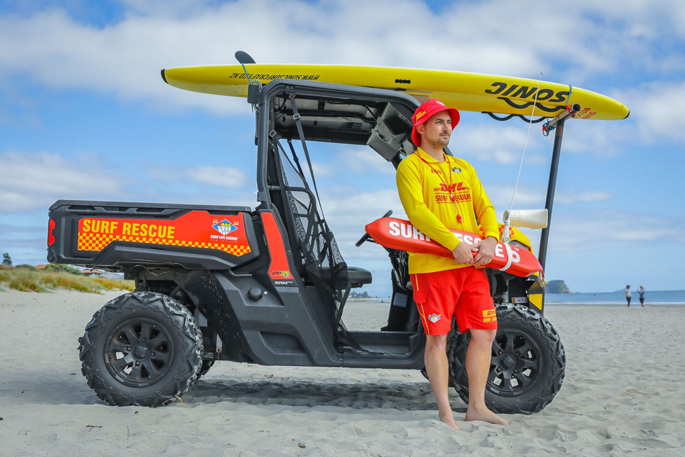
Surf lifeguards in the region are expecting a challenging season ahead as the El Niño weather pattern brings hotter days and draws more people to the coastline to cool down.
Niwa, part of Earth Sciences New Zealand, has said New Zealand will feel the impacts of a “very strong” El Niño event during spring and summer of 2026-27.
“New Zealand tends to experience stronger and more frequent winds from the southwest through to northwest from late winter through to early autumn during an El Niño event,” Niwa said in a statement.
“This typically brings drier than usual conditions for eastern and northern areas of both islands.”
Eastern Region lifesaving manager Chaz Gibbons-Campbell said the weather pattern’s strong winds could create additional hazards to beach-goers and the hot weather would likely draw more people to the sea.
“This year could be quite a challenging. We’re facing super El Niño conditions; it’s going to be super hot and I think we’ll see a lot of people trying to cool off in those afternoons and early evenings,” he said. “There’ll be some really strong winds around as well, so people need to be mindful.”
Those swimming outside patrol hours or away from patrolled areas should take extra care, Gibbons-Campbell said.
Be extra vigilant!
“Be extra, extra vigilant, make sure you’re swimming with people, like swim with a buddy, or you’ve got some form of flotation device available if you do get into trouble. Ideally choose a patrolled beach,” he said.
He said visitor data showed more than 7.5 million “hits” from mobile devices had been recorded along Tauranga beaches where people spent significant time at a beach location in the previous year.
“I think we’re going to have far more people out on beaches this summer.”
Shoulder seasons such as November could be particularly challenging, with people heading to the water before weekday patrols begin, he said.

Eastern Region lifesaving manager Chaz Gibbons-Campbell at Ōmanu. Photo / Kelly O’Hara
As a result, Gibbons-Campbell urged beachgoers to know how to float, check conditions and swim between the flags as surf lifesaving patrols return to the region’s beaches this Labour weekend.
Surf lifeguards will be back at Mount Maunganui, Ōmanu, Pāpāmoa and Waihī Beach this weekend, marking the start of the summer patrol season.
Gibbons-Campbell said the SafeSwim website, safeswim.org.nz, lists patrol locations and times and potential hazards at beaches where lifeguards may not be on duty.
“We’ve done a lot of work to incorporate a bit of automation into that website, so where there’s hazards that we know are likely to be at a beach, they will automatically be posted on that site as well,” he said.
Know how to float
Knowing how to float could increase a person’s chances of survival if they got into trouble.
“If you are entering the water, making sure you know how to float can increase your chances of survival if you get into trouble,” Gibbons-Campbell said.
He urged people to tell someone where they were going before swimming or surfing, and to keep an eye on one another. “Make sure that children are within arm’s reach,” he said.
Recognising rips could be difficult, even for experienced lifeguards, so he recommended taking five minutes to assess conditions before swimming.
“Even the most seasoned lifeguards still find it tricky sometimes to spot rips,” he said.
“You might have been down there the day before and it was fine, but the next day is always a different day.”
Channels around sandbanks, particularly between Mount Maunganui and Ōmanu, and areas near river outlets and drainage channels can present hazards. Harrison’s Cut is one location where swimmers need to take extra care.
Those using paddleboards, windsurfers and other watercraft should carry appropriate safety equipment and communication devices and ensure someone knows their plans.
“We do get a lot of people ringing up for us to go and check on people and when we get out there on the water, they’re like, ‘No, we’re fine’,” he said.
“But we’re of the opinion it’s better to go out and check and they be safe than not.”
Assess conditions first
Gibbons-Campbell urged swimmers to take time to assess conditions before entering the water.
“Before you just run down and jump in the water, spend five minutes or so just observing what the water is doing, what the waves are doing, to try and find that kind of safe spot to swim. And swim between the flags.”
Gibbons-Campbell said incident data showed many incidents occurred in surf measuring between 1m and 1.5m, often around rising or falling tides when water movement was stronger.
Volunteer patrols at Mount Maunganui, Ōmanu and Pāpāmoa will run from 11am to 4pm on Saturday, Sunday and Monday this Labour weekend, then continue each weekend.
Council-funded lifeguards begin patrols at Mount Maunganui, Tay St, Ōmanu and Pāpāmoa on December 7. Pukehina and Maketū patrols also start in December.